.png)
Finding the right dock scheduling software takes more than reading a feature list. Most comparison articles recycle vendor marketing copy without ever testing the product, checking whether pricing holds at scale, or asking whether the carrier experience is actually good enough to replace your current process.
This guide covers the five dock scheduling platforms we consider the strongest options in 2026. We evaluated each one on five dimensions: time-to-value (how fast you can go live), carrier self-service quality, pricing transparency, WMS and TMS integration depth, and whether the platform extends to yard management or stays focused on appointments only.
One important disclosure: Goramp is the publisher of this guide and is listed as a tool. We have done our best to assess it with the same critical eye as the others — including including its real limitations. See the Methodology section for how we handled this.
How We Evaluated These Tools
Each platform was assessed across five criteria:
1. Time-to-value — how quickly can a warehouse team go live without dedicated IT support?
2. Carrier experience — can a carrier find you, register, and book without calling your team?
3. Pricing transparency — are costs published, and do they stay predictable as you scale?
4. Integration depth — are there tested, maintained connectors for major WMS and ERP systems?
5. Scope — does the platform handle dock appointments only, or full yard management too?
We used vendor demos, public documentation, and verified reviews from G2 and Capterra. Where pricing is not publicly listed, we note that and explain what the vendor has confirmed through other channels.
Quick Picks: Which Tool is Right for Your Operation?
Before diving into the full reviews, here is a summary for readers who need a fast answer:
- Goramp: Best all-in-one platform (dock scheduling + yard management):
- Opendock: Best for high-volume North American carrier networks:
- DataDocks: Best for simple, fast dock scheduling without extras:
- Alpega Smart Booking: Best for operations that want dock scheduling built into a full TMS:
- Velostics: Best for 3PLs and shippers needing three-way scheduling with carriers and consignees:
What Is a Dock Scheduling Software?
Dock scheduling software manages the time slot layer of warehouse operations: when trucks arrive, which dock they use, and how all parties — warehouse staff, carriers, and drivers — are kept informed and coordinated. It replaces phone calls, emails, and shared spreadsheets with a structured system that everyone accesses from one place.
It is worth distinguishing dock scheduling from yard management. Dock scheduling handles the appointment and time slot layer. Yard management software (YMS) goes further and covers what happens inside the facility perimeter once the truck arrives: trailer placement, jockey task assignment, gate check-in, live yard map, and driver self-check-in. Some platforms in this guide combine both. Others focus on appointments only. Whether you need one or both is often the first question to answer before evaluating tools.
The 5 Best Dock Scheduling Software Platforms in 2026
These are the top five dock scheduling software in 2026:
1. Goramp - Best all-in-one Dock and Yard Platform
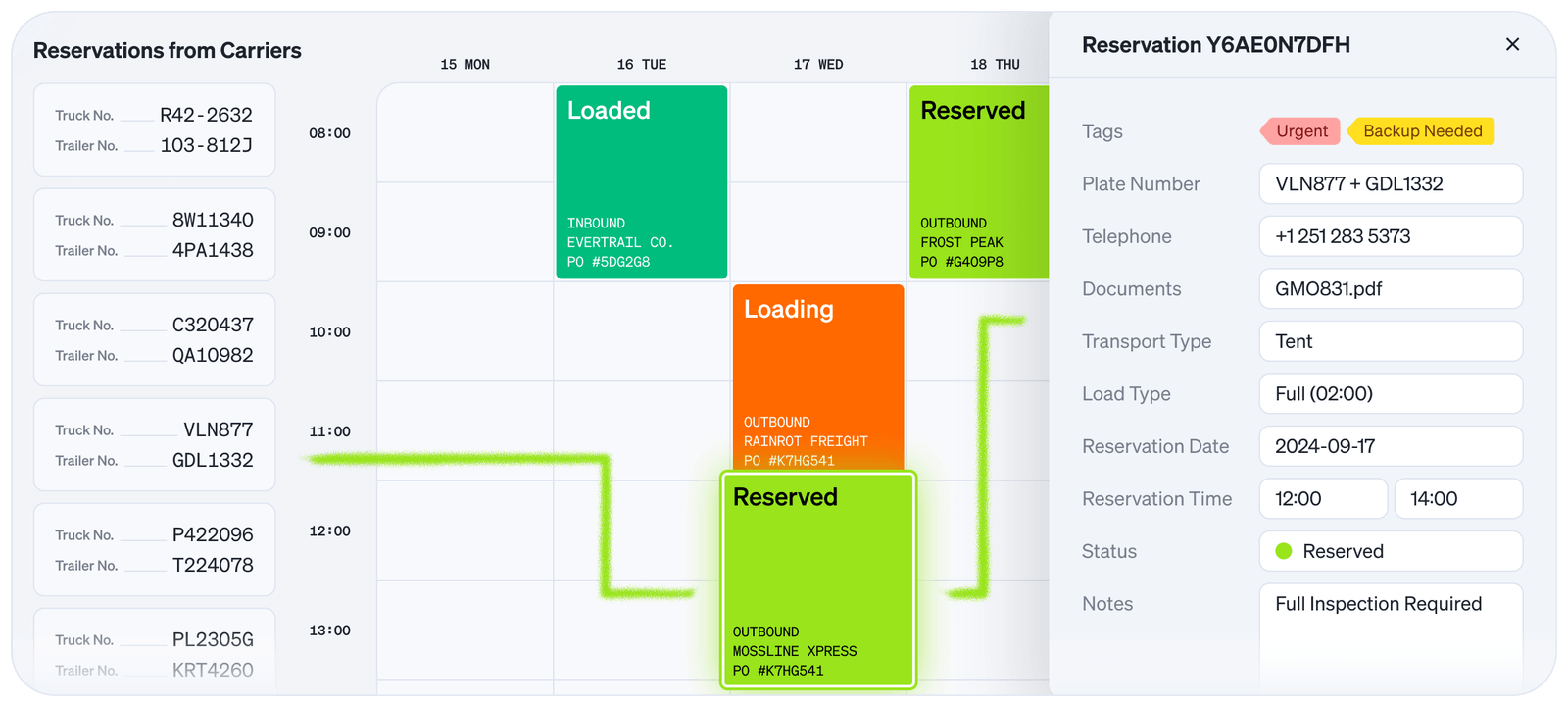
Goramp is a cloud-based platform covering the full scope of logistics site operations: dock scheduling, dynamic dock planning, yard management, gate automation, carrier and driver messaging, and real-time yard visibility. For warehouses that have outgrown standalone appointment tools and need dock and yard coordination in one system, it is the strongest combined option in this category.
Best for: Mid-to-large warehouses, particularly in Eur
ope, that need dock scheduling and yard management in a single platform. Also strong for operations managing multiple facilities or complex inbound and outbound flows. Goramp works across all major industries, with dedicated configurations for food and beverage, automotive, pharma, and 3PL.
Not ideal for: Small warehouses with just a few docks that need a fast, simple appointment calendar. The full feature set and pricing model can be more than a low-volume operation requires.
“Efficient, simple, and cost-friendly logistics solution. We undoubtedly saved costs and expanded our carrier contact range. The system is very simple and clear!”—Aliona Korol-Klevecke, Head of Sales at Bauroc.
By utilizing Goramp, businesses can tackle common challenges such as long wait times and inefficient scheduling processes, aiming to increase overall supply chain productivity. The software includes features for easy yard management, dock appointment scheduling, and freight management, making it a comprehensive tool for improving the efficiency of freight logistics operations.
Key features:
- Combined dock scheduling and yard management in one platform
- Dynamic appointment scheduling with real-time adjustments for delays and changes
- One-link carrier registration — carriers onboard via a single URL, no IT setup required
- PO validation — carriers can only book slots for orders with a confirmed purchase order ID
- Driver self check-in at the gate, with access control and automated notifications
- Live yard map with trailer and dock visibility
- Automated notifications for booking confirmations, changes, and cancellations
- Carrier and supplier performance reporting with dwell time and turnaround KPIs
- WMS, TMS, and ERP integrations via API and pre-built connectors
- Mobile-accessible across all devices
Pricing:
Starts from $175/month. Free trial available. Pricing scales with the number of docks, facilities, and modules — the full yard management suite involves a more guided rollout and higher price tier. Contact Goramp for a quote specific to your setup.
Honest limitations:
- Pricing scales quickly for large enterprise setups with multiple sites and advanced modules
- The full yard management module requires guided onboarding rather than self-serve setup
- Carrier network reach in North America is less developed than Opendock
- Some users report that the interface shows more information than needed until personalised
Customer review (from G2):
"Goramp enables us to align our business strategy across multiple departments through an intuitive and accessible platform. Whether reviewing inbound scheduling for raw materials or monitoring outbound shipments, our entire team has full visibility into day-to-day operations."
2. Opendock (Opendock Nova)— Best For High-Volume North American Carrier Networks

Opendock is the most widely adopted dock scheduling platform in North America. Its main differentiator is carrier network reach: carriers register for free and can search for and book with shippers directly through the platform, which significantly reduces friction when onboarding carriers you have never worked with before. For high-volume US and Canadian operations with large and varied carrier networks, this network effect is a real advantage.
Best for: High-volume North American distribution centres and warehouses managing large carrier networks, especially operations that regularly work with new or varied carriers. Opendock's camera-based gate automation (SmartGate) also makes it strong for facilities focused on reducing gate congestion and detention disputes.
Not ideal for: Smaller operations or those primarily based outside North America. At $6,000 per year per facility with no free trial, the entry cost is difficult to justify for low-volume docks. Evaluation without a trial period requires a significant commitment.
Key Features
- Largest carrier self-registration network in North America — carriers book without calling
- Carrier scorecard tracking on-time arrival rate, cancellations, and appointment adherence
- Customisable scheduling rules: lead times, appointment limits, dock-level restrictions
- SmartGate: camera-based automatic capture of arrival and departure events per appointment
- Drag-and-drop yard management with live trailer visibility
- Driver self check-in with kiosk support
- Document upload per appointment for BOLs and delivery confirmations
- WMS and TMS integration
Pricing: $6,000 per year per facility. No free trial. No per-dock or per-user pricing — it is a flat annual fee per location.
Honest Limitations
- $6,000/year per facility is enterprise pricing — hard to justify for lower-volume docks
- No free trial makes proper evaluation difficult before committing
- SmartGate camera hardware adds implementation complexity and upfront cost
- Less competitive outside North America where carrier network adoption is lower
Get a detailed comparison of Goramp vs Opendock.

3. DataDocks — Best For Clean, Simple Dock Scheduling
DataDocks is a dock scheduling and yard management platform known for having one of the cleanest, most intuitive interfaces in the category. It is built around doing the core job well — appointment scheduling, carrier self-service, and real-time dock visibility — without overcomplicating the feature set. The platform is specifically designed to help operations replace whiteboards and spreadsheets without a long implementation cycle.
Best for: Warehouses of most sizes that want a clean, easy-to-adopt dock scheduling tool with a strong carrier portal and real-time visibility. DataDocks hits a practical balance between functionality and ease of use that makes it one of the most accessible tools in the category.
Not ideal for: Operations needing deep, pre-built WMS or ERP connectors out of the box. DataDocks offers API access for custom integrations, but lacks the pre-built connectors that enterprise buyers expect. Also not ideal for complex multi-site operations that need a full yard management suite.

Key Features
- Real-time dock and yard visibility with live status dashboard
- Branded carrier self-service portal with a unique company booking link
- Timestamped arrival and departure records for detention dispute resolution
- Capacity limits per dock and yard area to prevent overbooking
- Flexible business rules for scheduling, approvals, and compliance
- Data validation to reduce booking errors
- Performance analytics: dwell time, appointment adherence, throughput trends
- Native iOS and Android apps for floor and yard access
- WMS and TMS integration via API
Pricing: Not publicly listed. DataDocks offers a free trial. Contact them directly for pricing — it is not available on their website or on review platforms as of May 2026.
Honest Limitations
- No published pricing — you need to go through a sales conversation to get numbers
- No pre-built WMS connectors — API is available but requires development resource
- Less suitable for 20+ dock enterprise operations needing full yard automation
“It is easy to apply for the available vacancies. But, the skill and responsibilities is not up to the mark.” —Review as seen on G2.com.
4. Alpega Smart Booking — Best For TMS Buyers And Enterprise Dock Scheduling
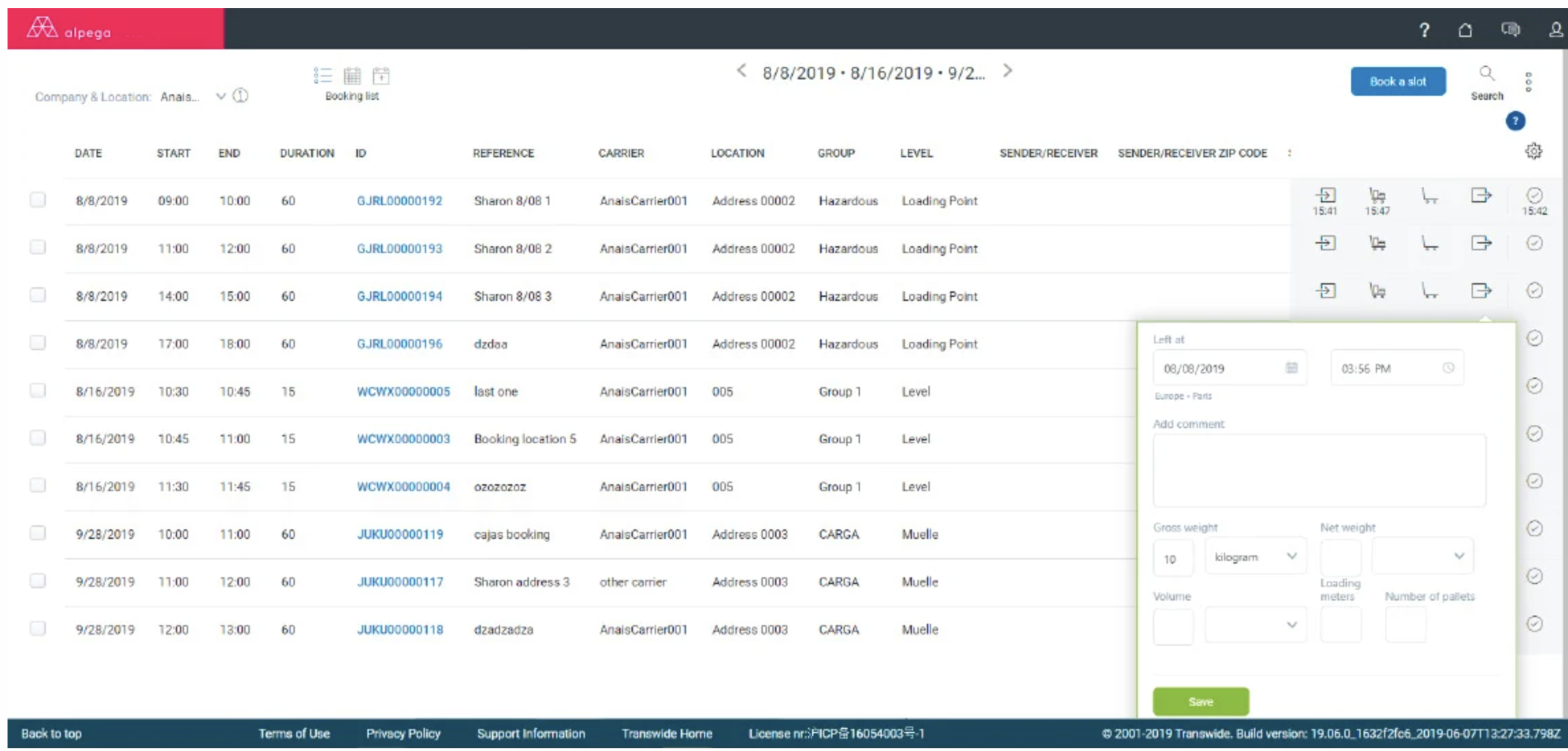
Alpega's Smart Booking is the dock scheduling and time slot management module within the Alpega TMS suite. What makes it notable in this list is that it can be deployed as a completely standalone dock scheduling tool — you do not need to buy the full TMS. For buyers already investing in a TMS who want dock scheduling built in, or enterprise operations that need dock scheduling with deep logistics network integration and a proven Gartner-recognised pedigree, it is a strong option.
Best for: Two distinct buyer profiles:
- Organisations already procuring Alpega TMS who want dock scheduling as an integrated module
- Larger enterprises with complex multi-site operations that want a standalone dock scheduling solution with enterprise-grade integration and a global support network
Alpega serves 200,000+ users across 80 countries and has been recognised in the Gartner Magic Quadrant for TMS for 10 consecutive years.
Not ideal for: Small or mid-size operations looking for a fast, self-serve tool. Alpega is enterprise software — procurement involves a sales process and guided implementation. There is no self-serve free trial.
Key Features
- Time slot management with carrier self-service booking portal
- Available as standalone dock scheduling module or integrated within Alpega TMS
- Real-time adjustments and rescheduling with automated notifications
- Advanced analytics for KPI management: turnaround times, arrival compliance, dock utilisation
- Seamless integration with existing ERP and IT landscape without business continuity disruption
- Carrier network of 80,000+ accessible through the Alpega platform
- CO2 emissions tracking per shipment
- Available in 15 languages — strong for global and multi-region operations
- Regular cloud-based updates informed by client feedback
Pricing: No published pricing. Alpega uses an enterprise contract model. Contact Alpega directly for a quote. Smart Booking can be licensed as a standalone module — you do not need the full TMS to access dock scheduling functionality.
Honest Limitations
- No free trial and no published pricing — requires a sales engagement before evaluation
- Implementation is guided and not self-serve — expect weeks, not days, to go live
- Overkill for simple warehouse operations that just need basic appointment scheduling
- Some users report the interface feels less modern compared to newer entrants
Customer Review (From Capterra)
“Very comprehensive solution — offered dock scheduling and inter-company organisation on an advanced level.”
5. Velostics — Best For 3PLs Needing Three-Way Scheduling

Velostics is a logistics SaaS platform built specifically around what it calls three-way scheduling: connecting shippers, carriers, and consignees in a single unified scheduling workflow. Where most dock scheduling tools handle the shipper-carrier relationship, Velostics adds the consignee layer — automatically generating scheduling pages for all suppliers and consignees, eliminating the back-and-forth phone calls and emails that happen when coordinating delivery windows across multiple parties.
Best for: 3PLs, brokers, and shippers that manage complex inbound and outbound flows involving multiple parties — particularly those where coordinating delivery windows with consignees is a daily bottleneck. Velostics is also a strong choice for operations already running Oracle OTM, MercuryGate, or BlueYonder TMS systems, given its confirmed integrations with those platforms.
Not ideal for: Simple warehouse operations that only need an appointment calendar for their own carriers. The three-way scheduling model is Velostics' differentiator — if you do not have a consignee coordination problem, you are paying for capability you do not need. Also note: published pricing starts at $4,500, but scales with facility count, users, and modules.
Key Features
- Three-way scheduling: shipper, carrier, and consignee all coordinated in one platform
- Automatic generation of scheduling pages for suppliers and consignees
- Dynamic dock scheduling with intelligent dock assignments and milestone management
- Carrier self-booking portal with real-time capacity visibility
- Detention risk alerts for trailers waiting at gate or dock
- Facility-specific configuration: loading rules by dock, equipment type, and load
- PO and load verification at dock assignment
- Integrations with Oracle OTM, MercuryGate, BlueYonder, WMS, and ERP systems
- AI orchestration layer available for advanced automation (higher tiers)
- Free 30-day trial available
Pricing: Starts at $4,500 (confirmed via G2 pricing page). Scales with number of facilities, users, and modules. Includes Slot, Dock, and Yard editions with options for Network and AI Orchestration add-ons. Free 30-day trial available at velostics.com/try.
Honest Limitations
- Three-way scheduling adds complexity — if you only need dock appointments, simpler tools cost less
- Pricing scales with facility count and modules, which can become significant for large networks
- Smaller brand presence and fewer public reviews than Opendock or Goramp
- Updates and new features are released frequently but communication about them is inconsistent, per G2 reviews
Side-by-Side Comparison
How To Choose The Right Dock Scheduling Software
The right tool depends almost entirely on the scope of your problem and the realities of your operation. Here is a practical framework to work through before requesting a demo from any vendor.
1. Decide Whether You Need Dock Scheduling, Yard Management, Or Both
If your primary problem is carrier self-scheduling — stopping the phone calls and emails — a focused tool like DataDocks or Velostics will solve it faster and at lower cost than a full platform. If you also need to manage what happens in the yard after the truck arrives (trailer placement, jockey tasks, live yard visibility, gate automation), you need a combined platform like Goramp or Opendock.
Buying a full platform when you only have a scheduling problem creates unnecessary complexity. Buying a scheduling-only tool when you have a yard management problem means you will need a second tool within 12 months.
2. Test The Carrier Booking Experience Before Anything Else
The primary reason most warehouses buy dock scheduling software is to stop taking scheduling calls. Before evaluating any tool, go through the carrier booking flow yourself. Create a test facility, pretend you are a carrier that has never worked with you before, and book an appointment. Count the steps. Ask: could a driver do this from a phone without any training?
If the carrier experience is poor or requires your team to manually activate carriers, the software will not fix your scheduling problem — it will move it. This single test eliminates more bad purchasing decisions than any feature comparison.
3. Understand The Real Cost Model Before Going To Demo
Pricing structures in this category vary significantly. Per-dock pricing scales unexpectedly as you grow. Per-user pricing adds up with seasonal workers. Flat-rate annual fees like Opendock's $6,000 per facility are predictable but expensive at low volume. Usage-based or facility-count models like Velostics scale with your network.
Before any demo, ask the vendor: what does this cost with 10 docks? 20 docks? When I add a second site? When I have 50 carriers? What is not included in the base price? Getting these numbers before you invest time in evaluation saves significant effort.
4. Confirm Integration Before Assuming It Works
Most enterprise-tier dock scheduling platforms say they integrate with SAP, Oracle, and other major WMS systems. But “integrates with SAP” can mean anything from a native certified connector to a one-way API export that requires internal development to maintain.
If WMS integration is essential for your operation, ask the vendor for a reference customer running the same WMS version you use. Ask how long the integration took to implement and whether it required any custom development. If they cannot give you a reference, treat that integration as unconfirmed.
5. Evaluate Implementation Time Against Your Team's Capacity
Self-serve tools like DataDocks, Velostics, and Goramp's core dock module can be live the same week. Enterprise platforms with WMS integration, multi-site configuration, and carrier communication campaigns typically take four to eight weeks. The question is not just how long implementation takes — it is whether your team has the capacity to run it alongside daily operations.
A sophisticated platform that takes six weeks and requires IT resource is often worse for a mid-size operation than a simpler tool that runs the same day, even if the simpler tool has fewer features.
Frequently Asked Questions
How Much Does Dock Scheduling Software Cost?
Pricing ranges widely across the category. DataDocks does not publish pricing. Goramp starts from $175 per month with a free trial. Velostics starts at $4,500 with a 30-day free trial. Opendock charges $6,000 per year per facility with no free trial. Alpega Smart Booking requires a custom enterprise quote. The biggest cost variables are the number of docks, whether you need yard management in addition to scheduling, and how many facilities you are managing.
What Is The Difference Between Dock Scheduling And Yard Management Software?
Dock scheduling handles the appointment layer: when a truck arrives and which dock it uses. Yard management software (YMS) covers everything inside the facility perimeter once the truck is on-site — trailer placement, jockey tasks, gate check-in, live yard map, and driver self-check-in. Some platforms like Goramp and Opendock combine both. DataDocks covers both to a degree. Alpega Smart Booking and Velostics are primarily focused on the scheduling and coordination layer. Knowing which problem you are solving determines which category of tool you need.
Does Dock Scheduling Software Integrate With SAP, Oracle, Or Other WMS Systems?
Most enterprise-tier platforms offer WMS and ERP integration. Alpega Smart Booking has confirmed native integrations with Oracle Fusion and SAP ERP. Velostics has confirmed integrations with Oracle OTM, MercuryGate, and BlueYonder. Goramp and Opendock offer WMS and TMS integration via API and pre-built connectors. DataDocks integrates via API, which requires development work on your side. If WMS integration is a hard requirement, always ask for a reference customer running the same system version before signing.
How Long Does It Take To Implement Dock Scheduling Software?
Implementation time ranges from the same day to several weeks, depending on the platform and the complexity of your setup. Goramp's basic dock scheduling module can be configured in under 15 minutes, with carrier onboarding taking about an hour. DataDocks and Velostics are similarly fast for standalone deployments. Alpega Smart Booking and enterprise-scale Goramp deployments with WMS integration typically take two to eight weeks. The main variables are system integration requirements, number of sites, and whether carrier onboarding needs a coordinated communication campaign.
What ROI Should I Expect From Dock Scheduling Software?
The main ROI drivers are reduced detention fees from predictable truck arrival windows, fewer staff hours spent on manual scheduling, and better dock utilisation. Goramp customers report saving 50% of working time in the first months of use, with expanded carrier reach as a secondary benefit. Alpega clients report carrier wait time reductions of up to 50%. Velostics customers report reducing shipment costs and improving cash flow by eliminating the back-and-forth with consignees. At the $175 to $500 per month price tier, most operations see payback within three to six months.
Is There A Free Trial Available?
Goramp, DataDocks, and Velostics all offer free trials. Velostics offers a 30-day free trial at velostics.com/try. Goramp's free trial is available via goramp.com. DataDocks offers a trial — contact them directly. Opendock and Alpega Smart Booking do not currently offer free trials. Opendock does offer free carrier registration, but the warehouse-side scheduling platform requires a paid plan.
The Bottom Line
The dock scheduling software market has matured. Every platform on this list will solve the core problem — eliminating manual scheduling calls and emails — better than a spreadsheet. The choice between them comes down to scope, scale, and the specific problems you are trying to fix.
Goramp is the strongest all-round choice for operations that need dock scheduling and yard management in a single platform, particularly in Europe and for mid-to-large multi-facility operations. Opendock earns its place for high-volume North American networks where carrier reach is the key differentiator. DataDocks is the cleanest, most accessible option for operations that want a focused tool they can run the same day. Alpega Smart Booking is the right pick for enterprise buyers already in the Alpega ecosystem or needing a Gartner-validated solution with global support. Velostics stands out for 3PLs and shippers where three-way scheduling with carriers and consignees is a daily operational pain.
Whatever you decide: run through the carrier booking flow yourself before signing anything, get the full pricing picture before investing time in a demo, and confirm any WMS integration with a real reference customer.


